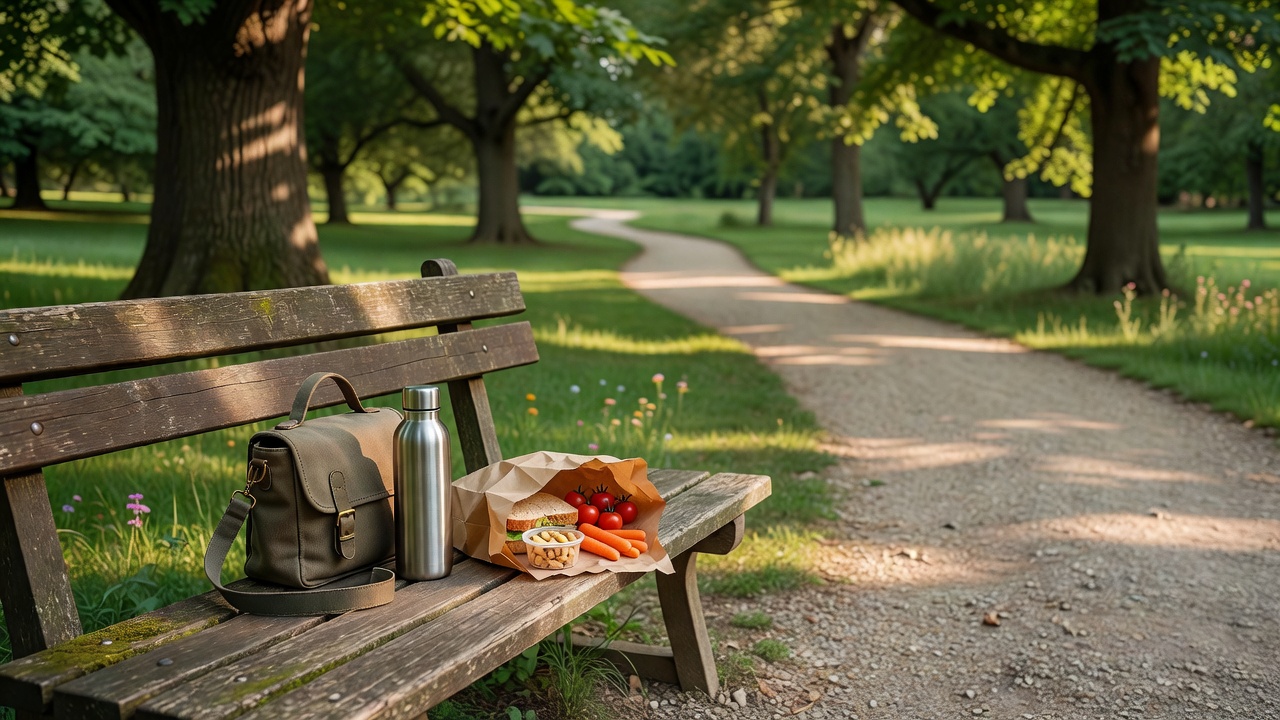
Start with the route, not the adventure label
Someone who loves getting outside may spend most of their time walking familiar streets, visiting gardens or taking short train trips. They do not automatically need expedition equipment. Ask what leaves the house with them, how long they are usually away and what happens when the weather changes. The answers create a much clearer brief than calling them an explorer.
Look for existing habits that could become easier. A bottle may be difficult to clean, a lunch container may not fit the bag, or small items may disappear into an unstructured pocket. These are specific problems. Buying a second backpack without checking fit, comfort and storage may simply create a larger version of the same clutter.
Evaluate the whole bottle, including the lid
An insulated flask is useful only if the recipient wants hot or cold drinks on that journey. Check capacity, empty weight, grip and whether it fits the actual bag pocket. A tall bottle that technically holds more may be awkward to remove while seated on a train. A wide base can fail to fit a cup holder even when the overall volume seems sensible.
Brands such as Klean Kanteen, Thermos and Nalgene offer different constructions, lids and intended uses. Do not transfer a feature from one model to an entire range. Read the exact product instructions for dishwasher suitability, hot liquids, carbonated drinks and replacement parts. A lid described as splash-resistant should not be treated as proof that the bottle can lie loose beside a laptop.
Cleaning is part of ownership. Can the recipient reach the interior, remove the seals and reassemble the lid correctly? Are replacement seals available for that model? A sophisticated drinking mechanism can introduce more parts to clean. If the person already has a bottle they love, a compatible replacement lid may be more useful than another complete vessel.
Remember that small items add up
A pouch can make a bag easier to use, but every organiser adds material and weight. Start with one group of items that genuinely belongs together. A washable lunch pouch, a case for the recipient’s existing cables or a place for tickets might earn its space. Several empty “just in case” organisers may not.
Fit matters for clothing and bags as well. Osprey, for example, offers packs with differing designs and sizing; a brand preference does not establish that a particular model will feel right. Where comfort depends on body fit, ask the recipient to choose or try the item. Keep return conditions in mind before removing labels or personalising anything.
| Usual journey | Possible direction | Priority check |
|---|---|---|
| Daily train commute | Requested flask or cable pouch | Leak instructions and bag clearance |
| Park lunch | Compatible lunch container | Food suitability, cleaning and packed size |
| Frequent day walks | Replacement part or chosen accessory | Weight, fit and realistic weather use |
Separate convenience from safety equipment
Weather claims need context. “Water-resistant” does not establish how long a pouch protects its contents, whether seams are sealed or whether it can withstand immersion. Read the manufacturer’s stated limitations. Do not assume an everyday bag can safely protect essential medication, electronics or emergency supplies in severe conditions.
For planned outdoor activity, the Met Office provides UK forecasts, while local official services should be used elsewhere. A gift is not a substitute for checking conditions, choosing a suitable route and carrying task-appropriate equipment. Specialist safety gear should be selected with the recipient’s knowledge and the relevant professional or activity guidance.
Travel restrictions also vary. The Transportation Security Administration publishes US screening information, and the International Air Transport Association explains passenger battery considerations. Airlines, countries and routes may impose additional requirements. Check current official rules before gifting power banks, tools or other restricted items to someone who flies. A compact size is not evidence of permission to carry an item.
Support outings without multiplying possessions
Replacing a worn part, arranging an agreed repair or supplying a familiar consumable can extend the usefulness of existing gear. Ask before cleaning, modifying or retiring an item: a well-worn bag may still be the recipient’s preferred companion. A new object is only one way to remove friction.
The Leave No Trace principles offer useful context for responsible outdoor habits. That does not mean a new reusable product is automatically the environmentally preferable choice. Continued use of a suitable item already owned can avoid another purchase. Give something that will actually travel, not something that merely looks ready for adventure.
Before wrapping: check ownership, packed dimensions, full weight, cleaning instructions and any route-specific restrictions. No product category here is a guarantee of safety or weather protection.