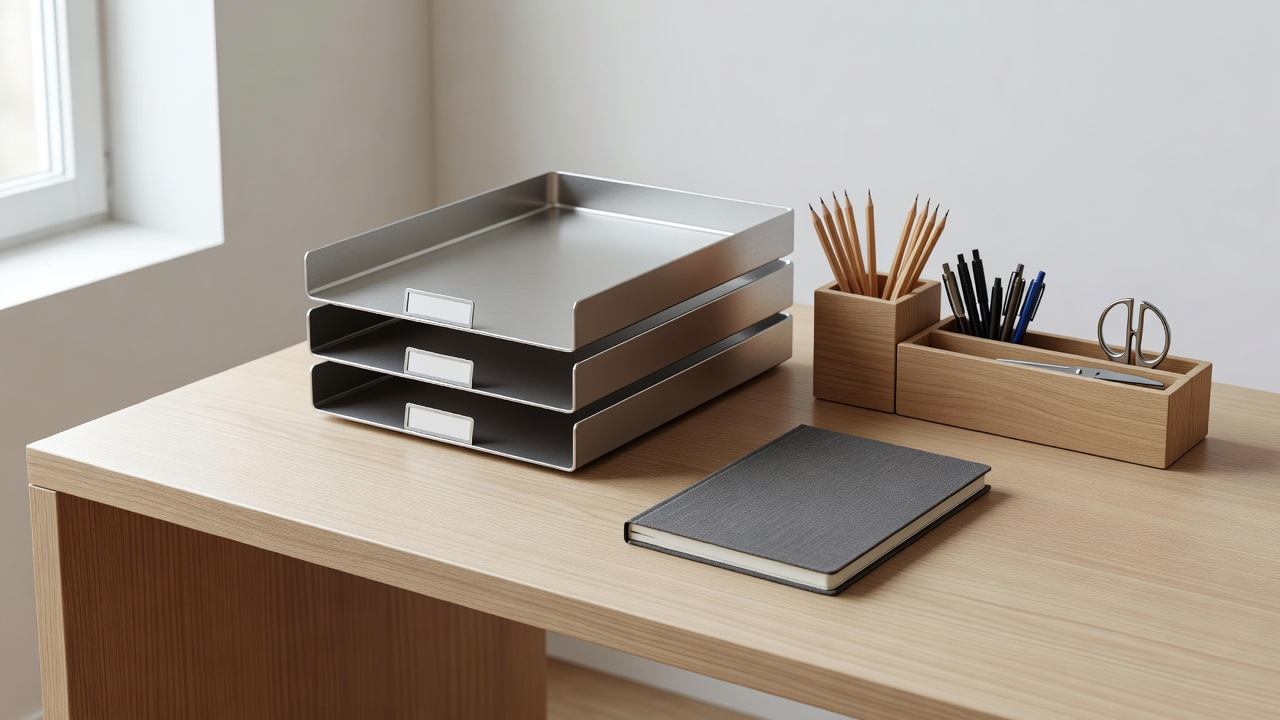
Notice their version of order
Some people want everything visible. Others prefer clear surfaces and closed drawers. A recipient might keep immaculate work files while happily leaving hobby materials in open baskets. None of these choices tells you their personality in a scientific sense. They simply reveal where a practical gift could fit.
Watch for a repeated inconvenience rather than an aesthetic difference. Keys may always land beside the door but slip behind a cabinet. Charging cables might travel between rooms without a reliable pouch. A drawer may contain the right categories but lack a divider that stays put. Solve that narrow problem instead of offering a complete organisational philosophy.
Measure the space that matters
For drawer inserts, measure usable internal width, depth and height. Handles, hinges, sloping sides and runners can reduce the available space. Check whether the drawer closes with the intended contents inside. For a desktop tray, account for access to sockets, the sweep of a desk lamp and the space needed to open a notebook.
A module that looks small in a product photograph may take over a shallow shelf. IKEA SKÅDIS accessories, for example, belong to a particular pegboard system; their appeal does not make them universal fittings. Likewise, MUJI storage ranges contain different sizes and materials. Match the specific item, not just the brand or colour. A photo with permission and a simple measurement are better evidence than memory.
Choose one point of friction
A landing tray works when the recipient already empties their pockets in one place. Look for a stable base, enough room for their actual items and a finish that will not mark the surface underneath. A tray is less helpful if they prefer to keep keys clipped inside a bag. In that case, replacing a worn clip—with agreement—may be the better gift.
A cable pouch can support someone who moves between workspaces. Check the size of their charger as well as the cable lengths. Avoid turning a storage gift into an unsolicited electronics purchase. USB-C describes a connector form, not a promise that every cable supports the same power or data capabilities. The USB Implementers Forum publishes information on USB specifications and certification; the recipient’s device requirements still matter.
Labels are another conditional gift. Someone who already uses a Brother P-touch label maker may appreciate the exact compatible tape. Buying a different machine creates another device to store and another supply format to maintain. Ask for the model number and preferred tape width, colour and adhesive type before buying a refill.
Compare the upkeep, not just the appearance
| Gift direction | Best clue | Check first |
|---|---|---|
| Modular drawer dividers | Items already grouped by task | Internal clearance and whether inserts slide |
| Document tray | Paper regularly arrives at one desk | Paper size, shelf height and access |
| Cable pouch | The same charger travels often | Charger bulk and cleaning instructions |
Felt can soften noise but catch dust. Open mesh makes contents visible but lets small items fall through. Deep compartments hold more yet make the bottom harder to reach. These are design trade-offs, not reasons to declare one material universally best. Think about the recipient’s hands, eyesight and cleaning habits, and ask if an easy-to-open or higher-contrast option would be useful.
Paper storage needs its own check. ISO 216 defines familiar A-series paper sizes, but notebooks and folders can extend beyond their pages. Allow for covers, tabs and envelopes. A box described as suitable for A4 paper may not accommodate a bulky binder. Review the seller’s usable measurements rather than relying on a category label.
Keep the recipient in control
Storage can carry an unintended message: “Your home needs fixing.” Avoid that by linking the gift to a frustration they have actually expressed. Try, “You mentioned that the small drawer keeps jamming. Would some measured dividers help, or would you rather leave it?” Their answer is part of the gift selection, not an obstacle to it.
Do not reorganise someone’s belongings as a surprise. A visually tidy arrangement can disrupt a system that makes perfect sense to its owner. If they would welcome practical help, offer a short session on their terms. They choose what stays, where it goes and when to stop. A useful gift should reduce decisions, not create a new obligation to maintain your preferred version of order.
Before buying: confirm ownership, measure the actual space, check returns and leave existing systems intact. Brand examples illustrate compatibility questions; they are not tested recommendations.